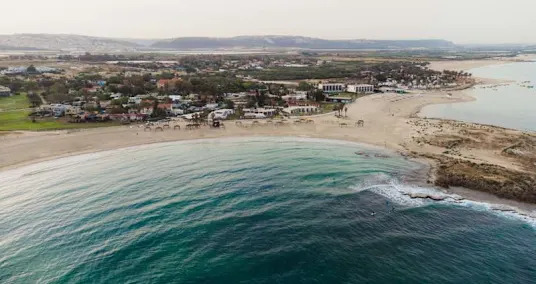
The discovery was made in an ancient shipwreck in the Dor Lagoon near the Carmel Coast, where archaeologists recovered nine pieces of unprocessed iron known as “blooms.”
Researchers from the University of Haifa said Wednesday that an underwater excavation off Israel’s northern Mediterranean coast uncovered what they described as the earliest known cargo of raw iron transported by ship, dating back around 2,600 years, Xinhua reported.
The discovery was made in an ancient shipwreck in the Dor Lagoon near the Carmel Coast, where archaeologists recovered nine pieces of unprocessed iron known as “blooms.” According to the university, the find provides direct evidence of how iron was transported in its earliest commercial stages.
The material was preserved in its original form, having solidified directly in a smelting furnace without undergoing forging or further refinement. Researchers said this distinguishes the cargo from later iron artifacts that typically show signs of shaping or tool-making.
Unlike copper and bronze, which could be melted into liquid form in ancient production processes, iron was heated with charcoal to produce a solid, porous mass. That mass was generally hammered to remove impurities and create denser material suitable for tools and implements.
The recovered blooms showed no indication of that secondary processing stage, suggesting they were transported immediately after production.

Earliest iron shipment discovered in ancient Mediterranean wreck
To determine the age and condition of the cargo, researchers conducted microscopic and chemical analyses.
Radiocarbon dating was also carried out on charred wood embedded in one of the pieces, helping confirm the timeline of the shipment. The findings were published in the journal Heritage Science.
Researchers said the cargo indicates that iron was being moved in raw form from production sites to other locations for further processing, pointing to a level of specialization in ancient manufacturing and trade networks in the Mediterranean.
The University of Haifa said the discovery provides new insight into early iron production and distribution practices in the region.
LATEST POSTS
- 1
 Don't miss these five impressive spots in Bangkok
 - 2I visited the largest collection of public telescopes in the US in Oregon's high desert, and the dark skies blew me away
- 3The most effective method to Integrate Compact disc Rates into Your Retirement Arranging
- 4The next frontier in space is closer than you think – welcome to the world of very low Earth orbit satellites
- 5Mexico says a third of 130,000 missing people might be alive, fueling criticism from families



- I watched the buzzy new AI documentary — and left feeling both hopeful and terrified
- Which Countries Would Suffer Most in a Global Energy Shutdown? This Study Has Answers
- Netanyahu expects Iran's leadership to fall
- From Specialist to Proficient Picture taker: Individual Triumphs
- Israeli archaeologists launch project to trace origins of ancient pottery
- Satellite data reveals a huge solar storm in 2024 shrank Earth's protective plasma shield
- Are multiverses real? An astrophysicist explains why it depends on how you define ‘real’
- AI is making spacecraft propulsion more efficient – and could even lead to nuclear-powered rockets
- Audits of 6 American Busssiness Class Flights