When you buy through links on our articles, Future and its syndication partners may earn a commission.

The first test flight of Landspace's Zhuque-3 rocket ended in a fiery explosion after successfully reaching orbit.
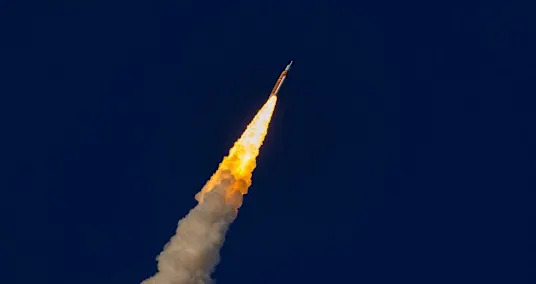
Chinese company Landspace launched its 216-foot (66-meter) stainless steel Zhuque-3 rocket from the Jiuquan Satellite Launch Center in the Gobi Desert in northern China on Tuesday (Dec. 2). The reusable, methane-liquid-oxygen-powered rocket successfully placed its expendable second stage in orbit, according to a statement from Landspace.
But after making a successful reentry, the rocket's first stage booster appeared to lose an engine during its landing burn and catch fire before crashing into the ground in a spectacular explosion. "An anomaly occurred as the first stage approached the designated recovery zone. No personnel safety issues occurred," Landspace wrote on social media. The company is now investigating the anomaly to discover its root cause.
Despite the landing failure, Landspace is hailing the test flight as a success, adding in its social media post that "China's first rocket recovery attempt achieved its expected technical objectives." These include verifying Zhuque-3's recovery system, engine throttling, and attitude control. Stills from videos of the crash landing show that the first stage landed within just meters of its target landing zone.
Zhuque-3 resembles SpaceX's dependable Falcon 9 rocket; both rockets feature a reusable first stage and an expendable upper stage and are powered by nine engines.
Zhuque-3's Tianque-12A engines are powered by a mixture of liquid methane and liquid oxygen (methalox), however, while the Falcon 9's Merlin engines burn liquid oxygen and rocket-grade kerosene.
Zhuque-3's payload capacity is similar to Falcon 9's as well, able to loft 40,350 pounds (18,300 kilograms) to low Earth orbit (LEO). Falcon 9, meanwhile, can send 50,265 pounds (22,800 kg) to LEO.
A Landspace previous rocket, Zhuque-2, became the world's first methane-powered rocket to reach orbit in July 2023. SpaceX's Raptor engine, which powers its Super Heavy booster and its Starship second stage vehicle, also burns liquid methane and liquid oxygen.
The Zhuque rockets are named for the vermillion bird from Chinese mythology that represents the fire element in Taoist five-element cosmological system.
LATEST POSTS
- 1
 ‘Dying of thirst’: Inside Gaza’s al-Mawasi water crisis
 - 2'Israel has the right to continue its attacks,' Lebanese Foreign Minister announces
- 3Day to day Temporary Positions That Compensate Fairly in the US
- 4Heart disease risk greater for women with a common condition they may not be aware they have
- 5Ageless Tastefulness: An Outline of Valuable Gemstones and Adornments



- Lucky airplane passengers capture NASA's Artemis 2 moon launch from the sky
- Belarusian parliament passes a bill to crack down on LGBTQ+ rights
- France bans Muslim gathering citing risk to participants
- I watched the buzzy new AI documentary — and left feeling both hopeful and terrified
- How Mars 'punches above its weight' to influence Earth's climate
- Tata Motors, BMW among automakers set to raise prices in India
- Strength training is crucial after menopause. How to make the most of your workouts
- Presenting Nintendo's New Pastel Satisfaction Con Tones for Switch Gamers: 3 Upscale Choices
- Iranian president warns of retaliation against Gulf states